U.S.S. Yorktown (CV-5) 1940

Tom's Modelworks. 1/700th
Scale Printed and Cast Resin
Reviewed by Devin Poore, December 2025
|
| USS Yorktown (CV-5) and her sister USS Enterprise
(CV-6), came about as projects of President Franklin D. Roosevelt's "New
Deal", which ordered two carriers based upon the lessons learned from USS
Ranger (CV-4). Both ships launched and commissioned in the late
1930s. Participating in fleet maneuvers and war games, they helped shape
the doctrine that would drive the U.S. Navy's use of air power in World
War II.
Transferred from the Pacific fleet to the Atlantic in April of 1941,
Yorktown participated in convoy escort of American merchantmen,
to show the U.S. flag and protect interests as German U-Boats roamed the
Atlantic. After the attack on Pearl Harbor on December 7th, she was quickly
sent back to the Pacific, initially escorting a convoy of Marine reinforcements
to American Samoa, after which she met up with her sister Enterprise
for raids on Japanese outposts in the vicinity. Shortly thereafter she
put into Pearl Harbor for resupply, before being sent to the South Pacific,
where she'd operate until the Battle of the Coral Sea in May. After taking
damage in that battle, she returned to Pearl Harbor for a rushed repair
job, which allowed her to participate in the Battle of Midway. Struck by
bombs and aerial torpedoes during the battle, she was sunk three days later
by a submarine.
In May of 1998, Dr. Robert Ballard, of Titanic discovery fame,
found her wreck 3 miles below the surface of the Pacific. She rests upright
on the ocean floor in remarkably good condition. Several different expeditions
have visited her wreck in recent years, each revealing new details about
the ship. |
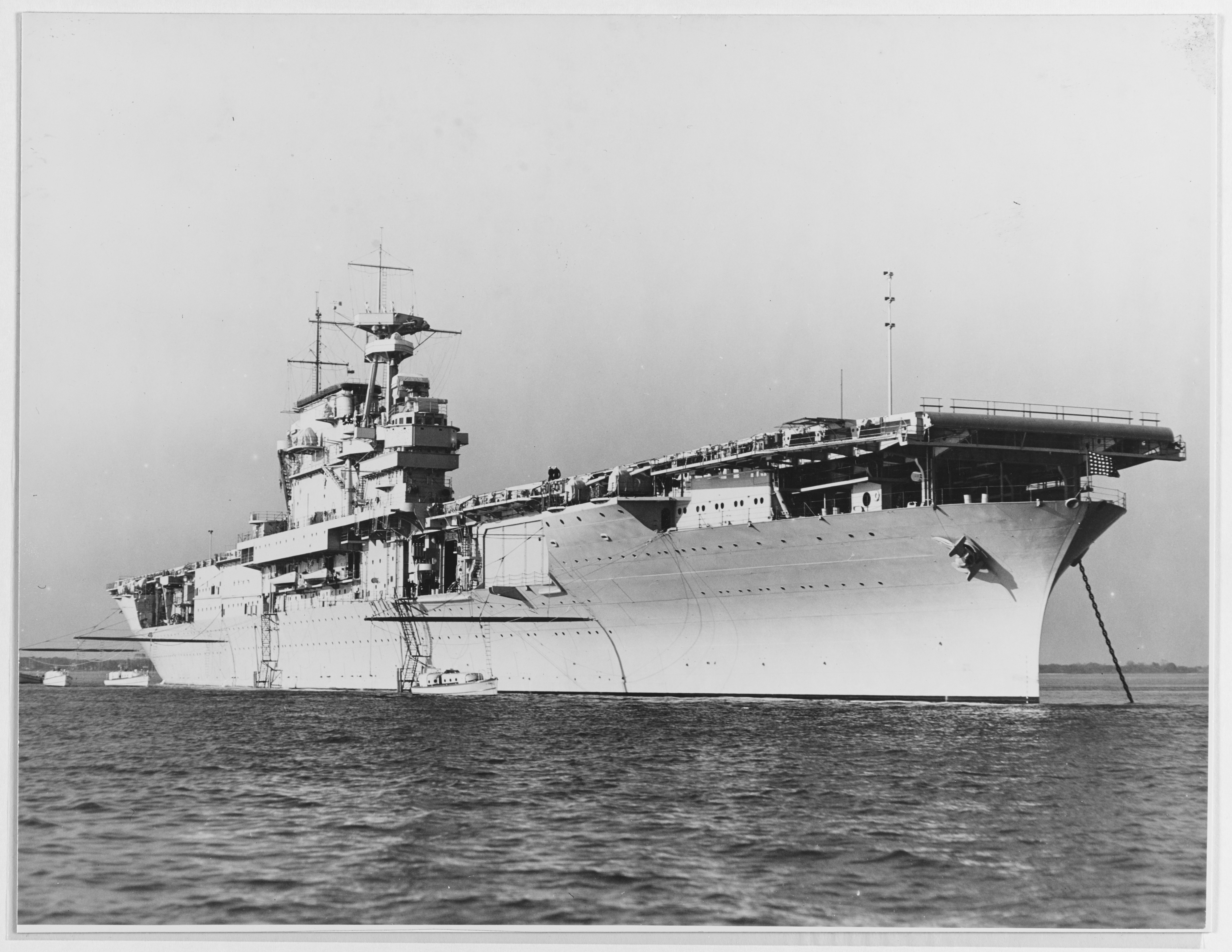
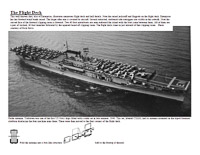
USS Yorktown anchored off Virginia in 1937
|
| HULL and DECK |
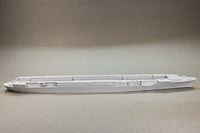
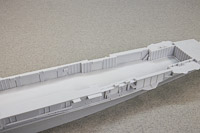
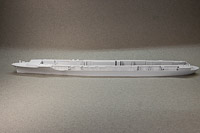
| The genesis of the Tom's Modelworks' kit of Yorktown
is the older HP Models resin kit. Pretty much the only thing kept from
those older molds were the hull, flight deck, stern platform, catapult
machinery deck, and flight deck supports. Those parts were updated (or
in this case, backdated) and cleaned-up to be cast for this kit. The hull
is a solid one-piece affair, with a little flash here and there, but nothing
major. All of the pre-war portholes are depicted, most of which the modeler
will want to sharpen a bit with a few twists of a drill bit; typical of
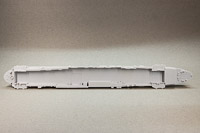
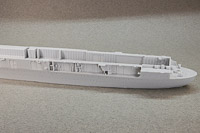
all resin cast ships. The hangar deck has a decent amount of detail for
the scale and what will be visible through open hangar doors and lowered
elevators. Recesses are depicted for lowered elevators, hangar deck catapult
tracks are present, hanger doors are appropriately corrugated, and platforms
such as the 5" gun galleries are thin and warp-free.
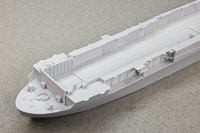
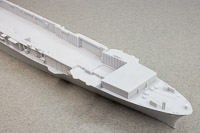
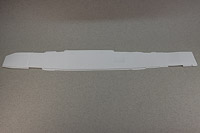
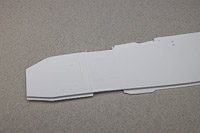
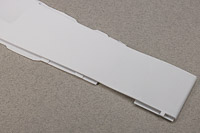
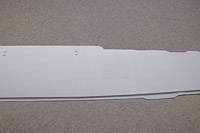
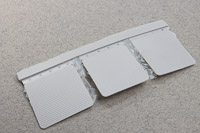
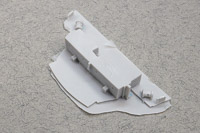
The flight deck is also a one-piece casting. This is my only major quibble
with the kit, because, as the flight deck is appropriately thin, it's too
much so in a few places. The elevators are tissue paper thin, to the point
of being warped, and the forward flight deck is also warped. The good news
is that separate pieces for the elevators are included, so the warped flight
deck pieces can be cut out and replaced, and the majority of the flight
deck warping will be straightened when it's glued to the hull. Still, I'd
like to see a little more robust rendition of this part of the kit. |
|
 |
 |
 |
 |
 |
 |
 |
 |
 |
 |
 |
 |
| ISLAND |
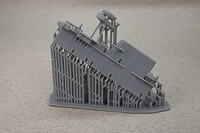
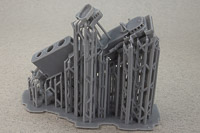
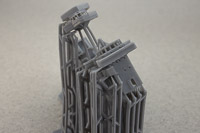
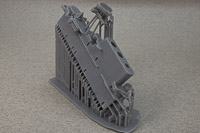
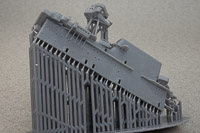
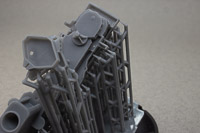
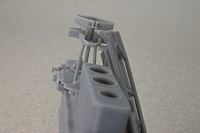
| The largest printed part in the kit is the island. Printed
in "almost" one piece, detail is sharp and with minimal if any visible
artifacts. The piece is well supported on its print raft, so careful clipping
is needed to remove it. Four sections of catwalk and searchlight platforms
are provided as separate printed pieces (not shown) to aid in the placement
of the "Y" decal on the island; the island can be painted and the "Y" attached
before the platforms, or the platforms can be added before paint, and the
"Y" decal cut to fit around them. A clever option.
Mast legs are straight, everything's aligned, and printed details such
as platforms are thin and warp-free. Several of the doors are depicted
open, showing into the hollow island structure. |
 |
 |
 |
 |
 |
 |
 |
| AIRCRAFT |
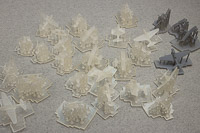
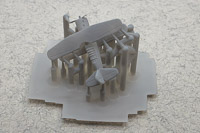
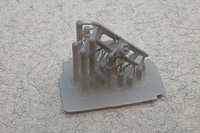
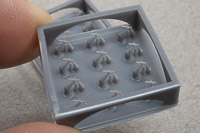
| The aircraft are printed in clear resin. I'm
not an adherent to the clear aircraft theory (and to be fair, Tom's says
they aren't either, they're simply getting the best prints with this particular
resin), so I primed a few examples to check their quality, and so that
they'd actually show up in photos.
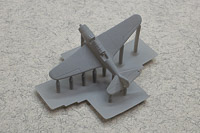
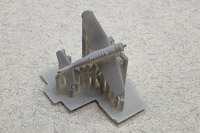
Aircraft included are F3F, BT-2, TBD Devastator, SBC-3 and J2F. There
are 4 types of Devastator planes - open canopy/closed canopy, folded wings,
open wings - and two types of BT-1 -open and closed canopy. Care will need
to be taken removing some of the smaller planes from the supports, as the
supports are larger than the parts they're supporting. Some of the biplanes
have attached propellers, and those will be very tricky to keep in one
piece. |
 |
 |
 |
 |
 |
|
 |
| PHOTO ETCHED BRASS AND DECALS |
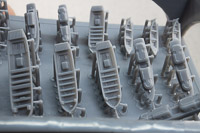
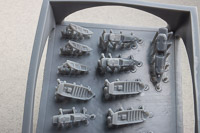
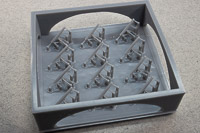
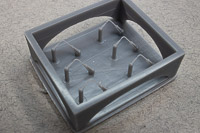
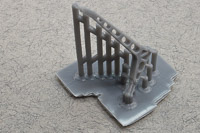
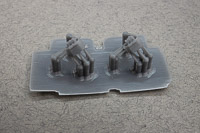
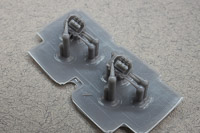
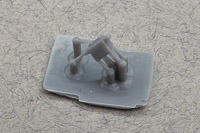
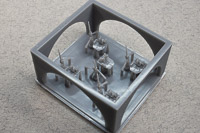
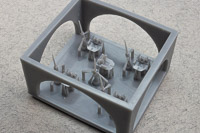
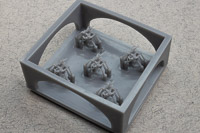
| The majority of the parts for the ship herself are printed
resin. Carriers in late 1930s carried a lot of boats, and this kit comes
with 13 of them. All are sharply printed and nicely detailed. To move around
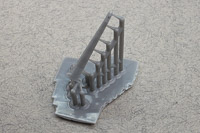
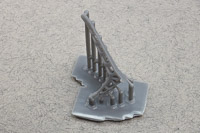
those boats you need cranes, and a selection of hangar deck cranes, boat
davits, boat cranes, and the unique flight deck aircraft crane are all
represented. Deck-edge aircraft outriggers are also included as printed
parts.
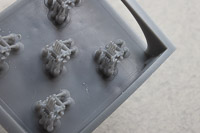
Yorktown's weaponry is included as printed, open 5"/38 mounts,
1.1" quadruple "Chicago Pianos", and .50cal mounts. The details on these
parts, especially the .50cal mounts, are extremely fine. Various searchlights
and other small details are also included, such as yard arms, the masts,
rangefinder, and the unique MK 33 director that Yorktown carried.
Overall the 3D printed parts are excellent across the board. There's
very little print artifacts visible on a few pieces, and those only show
under magnification. There are extras of certain pieces included, such
as the 5" mounts, boarding ladder davits, etc., which are nice additions.
|
 |
 |
 |
 |
 |
 |
 |
 |
 |
 |
 |
 |
 |
 |
 |
 |
 |
 |
 |
 |
 |
 |
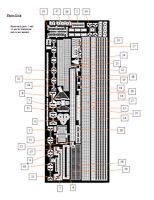
| ETCHED BRASS |
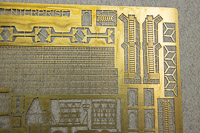
| The included brass is actually Tom's Modelworks
set #776, for Yorktown class carriers. The set includes various
radars and antennas, LSO platforms with their safety jump nets, as well
as flight deck windbreaks. Some of the printed cranes are also represented
here, allowing the modeler to choose whichever they prefer. The usual railings
and ladders are included, along with funnel caps, line reels, and boat
accommodation ladders. There also appear to be some hangar deck overhead
beams; the entire hangar deck should have them, but in such a small scale
with limited openings, a few strategically placed pieces of these will
go a long way in selling the illusion.
For the aircraft there are also some propellers included, for those
aircraft included that don't have printed props, or if one wishes to replace
said printed props with something thinner. |
 |
 |
 |
 |
| DECALS |
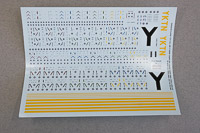
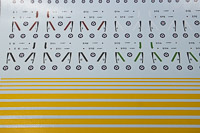
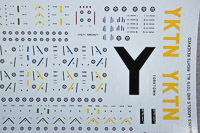
| The kit comes with an extensive set of decals.
Details of the ship are covered, including striping and the YKTN markings
for the flight deck, as we;l as the ship's name and hull number. The huge
"Y" that adorned Yorktown's island for several years, to differentiate
her from her sister Enterprise, is also included.
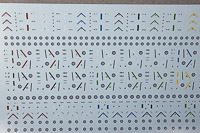
The bulk of the decals are for the airgroup. There are tons of markings,
all very colorful. Included in the kit is an overview of each aircraft
and the markings used (a sheet that I know I photographed but I can't find
in my photos, for some reason), which will get the modeler a long way towards
fitting out the airgroup, but some additional research will likely be required. |
 |
 |
 |
 |
| INSTRUCTIONS |
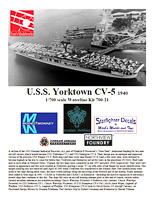
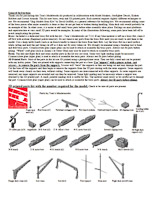
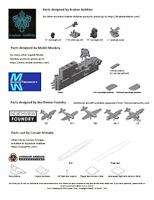
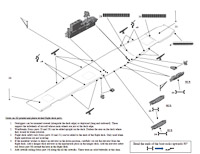
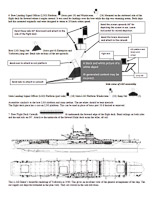
| The instructions start with a parts
list, giving a perspective render of each printed part and the number included.
Items are also broken down in to subgroups, based upon who produced each
part, be it Tom's Modelworks, Kraken Hobbies (guns and searchlights), Model
Monkey (island and island platforms), Northview Foundry (aircraft), and
Corsair Armada (resin cast hull, flight deck, elevators, etc.).
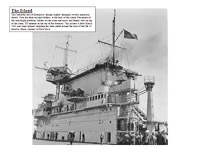
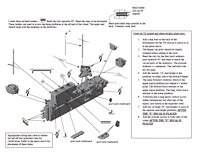
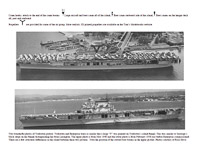
The kit instructions are straight-forward, and on the simple side. While
specific items such as the printed parts have their locations noted for
assembly, as well as some of the brass ladders, platforms, etc., many of
the brass rails, ladders, etc., are not mentioned, and will have to be
placed using photo references (some of which are included in the instructions).
Overall, nearly everything needed to build the kit is shown, with the perspective
CAD views showing part placement being quite helpful. |
 |
 |
 |
 |
 |
 |
 |
 |
 |
 |
 |
 |
 |
| *ENTERPRISE PARTS* |
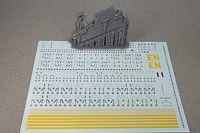
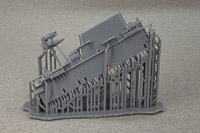
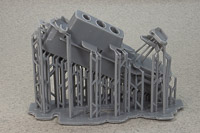
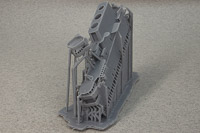
| Tom's Modelworks makes two Yorktown class kits of
the 1940 time frame, the second being of her sister, Enterprise.
The kits of Yorktown and Enterprise are nearly identical,
the only differences in the two boxings are the island, the decal sheet,
and the instructions (and the instructions are close to the same, only
historical reference photos are swapped out). Tom's sent these along to
accompany the review kit only- the Yorktown kit DOES NOT include
these additional parts, but they're shown here as an indication of what
differences there are between the two. |
 |
 |
 |
 |
| CONCLUSIONS |
| When the original HP kits of the Yorktown class
sisters came out years ago, they, the under scale Tamiya kits, and the
old Revell kits, were the only games in town. Now, over the past ten years,
there's been an explosion of kits of these sisters, (about time and rightfully
so!), so, where does this kit fit in? These kits of Yorktown and
Enterprise are the only pre-war fit models of the ships. The aircraft
and decals are unique and very well done. While a resin kit, the one-piece
hull is almost ready to go, after a little sanding of over pour, with the
printed island also being nearly ready for paint. It won't be as easy of
a build as the Academy Yorktown or Enterprise kits, but those
are simplified models, and to back-date those or the Trumpeter offerings
to a pre-war fit would take a fair bit of surgery on the flight deck gun
galleries alone, not to mention other details. All of the pieces here are
solid and well rendered, with only the flight deck warping showing the
need for corrective surgery, and even that shouldn't be a much work. And
finally, who doesn't love working on an old-school resin kit?
Recommended. Thank you to Tom's Modelworks for this review sample. The
kit as of this writing in 2025, is selling for $129.99. You can find their
kits online on their website, which is linked via their logo to the right. |

|
© ModelWarships.com
|


